The fastest way to ruin a house hack is not a bad interest rate. It is a bad tenant living fifteen feet from your bedroom. When you live in the same property you rent, tenant screening stops being a paperwork task and becomes an operating system for your daily life.
That does not mean you should screen emotionally, casually, or based on whether someone “feels like a good fit.” That is how new landlords create fair housing risk, weak boundaries, and uncomfortable living situations. The better approach is simple: write clear criteria, apply them consistently, document every step, and manage the relationship like a professional from day one.
This guide is built for the investor who is using house hacking as the entry point into rentals, then eventually wants to graduate into rental portfolio systems, BRRRR deals, and possibly a DSCR refinance strategy. If you want the house hack to become a portfolio asset instead of a headache, tenant screening is where that discipline starts.
Why Tenant Screening Matters More in a House Hack
In a normal rental, a bad tenant creates financial and operational stress. In a house hack, a bad tenant can also affect your sleep, privacy, parking, guests, noise, shared spaces, and ability to enjoy your own home. The tenant is not just a line item on your rent roll. They are part of the property environment.
That pressure causes some new investors to make one of two mistakes. They either become too casual because they are renting to someone nearby, a friend, or a friend-of-a-friend, or they become too personal and start asking questions that should never enter the screening process. Both mistakes are avoidable.
HUD states that the Fair Housing Act protects people from discrimination when renting, buying, seeking a mortgage, or engaging in other housing-related activities.[1] HUD also identifies protected classes under federal law as race, color, national origin, religion, sex, familial status, and disability.[2] Local and state rules can add additional protected categories, so your screening system should be built around objective business criteria rather than personal preference.
| Screening Goal | Weak Landlord Approach | Professional House Hacker Approach |
|---|---|---|
| Protect the property | “They seem nice.” | Written criteria, verified income, rental history, credit review, and references. |
| Protect daily life | “I think we would get along.” | Clear lease rules on noise, parking, guests, pets, shared spaces, and maintenance reporting. |
| Reduce legal risk | “I just ask whatever I need to know.” | Same questions, same process, same decision framework for every applicant. |
| Build portfolio habits | “It is only one unit.” | Treat the house hack like the first property in a scalable system. |
The point is not to be cold. The point is to be consistent. A house hack may feel personal because you live there, but it is still a housing transaction. Professionalism protects both sides.
Start With Written Rental Criteria Before You Advertise
Your screening system should be written before the listing goes live. If you make up criteria after applications come in, you increase the odds of inconsistency. That inconsistency creates confusion for applicants and risk for you.
A strong criteria sheet usually includes minimum income expectations, employment or income verification requirements, credit standards, rental history expectations, eviction history review, criminal background review where legally permitted, pet policies, occupancy standards, smoking rules, and required move-in funds. You should also define how you handle incomplete applications.
For a house hack, the criteria should be tied to the unit and the lease, not to whether you personally want to hang out with the applicant. You can require rent affordability. You can require a complete application. You can verify prior landlord references. You can set reasonable property rules. You should not select based on personal traits, assumptions, protected-class characteristics, or whether someone shares your lifestyle.
Example House Hack Screening Criteria
The exact criteria should be reviewed with a local attorney or property manager, but the structure can look like this:
| Category | Example Criterion | Why It Matters |
|---|---|---|
| Income | Gross monthly income equals at least 3x monthly rent, or documented alternative ability to pay. | Reduces collection risk without judging the applicant personally. |
| Rental history | Positive prior landlord references and no unresolved lease violations. | Helps identify payment, care, and communication patterns. |
| Credit | Credit profile reviewed for payment behavior, collections, and housing-related debts. | Gives context, but should not be the only decision factor. |
| Background | Reviewed only as allowed by applicable law and policy. | Keeps the process consistent and compliant. |
| Move-in funds | Security deposit and first month’s rent due before possession. | Protects cash flow and sets professional expectations. |
| House rules | Written policies for parking, quiet hours, pets, guests, smoking, shared spaces, and maintenance. | Prevents “landlord next door” conflict after move-in. |
This is where property management software earns its keep. Buildium, which is already a natural fit on the Tools & Resources page, includes leasing, tenant screening, online payments, maintenance requests, resident communication, accounting, and reporting features.[3] For a house hacker with one to four units, that may sound like overkill until the first time you need to prove what was collected, what was promised, and what was documented.
Use a Standard Application Process
A clean application process keeps you from accidentally creating different standards for different people. Every applicant should receive the same application, the same written criteria, the same list of required documents, and the same timeline.
The application should capture identity information, income sources, rental history, references, pets, vehicles, proposed occupants, and authorization for any third-party screening reports you legally use. Keep the language professional and housing-focused. Do not ask about protected-class details. Do not ask casual questions because you are curious. Do not use social media stalking as your screening process.
If you use a tool like Buildium, the applicant workflow can help centralize applications, screening, lease documents, online payments, and future resident communication.[3] That matters because your memory is not a system. A text thread is not a file cabinet. A verbal agreement is not a lease.
The Screening Workflow
A simple house hack workflow looks like this. First, publish the listing with rent, deposit, availability date, unit details, pet policy, parking, utilities, and application criteria. Second, pre-screen inquiries only against objective criteria: move-in date, number of occupants, pets, income range, and whether they are ready to submit a formal application. Third, show the unit and shared areas, if applicable, using the same information for each prospect. Fourth, collect complete applications. Fifth, verify income, employment or other income sources, landlord references, and screening reports. Sixth, approve, conditionally approve, or deny based on written criteria.
That process may feel slower than “I met someone and they seem fine.” Good. Speed is not the goal. A stable tenant who pays on time and respects the property is worth more than filling a vacancy three days faster with the wrong person.
Fair Housing Considerations for Owner-Occupied Properties
House hackers often ask whether fair housing rules apply when they live in the property. This is where you should stop guessing and get local legal guidance. Federal law, state law, local rules, advertising rules, and property type can all matter. HUD’s baseline position is clear: housing discrimination is illegal in nearly all housing, including private housing, public housing, and housing receiving federal funding.[2]
The practical investor takeaway is straightforward: build your system as if professionalism always applies. Advertise the unit, not the person you hope to attract. Describe the bedroom, unit, parking, utilities, location, amenities, lease term, and qualification criteria. Avoid phrases that imply preference for a particular type of person.
The safest house hacking mindset is this: screen for ability to perform under the lease, not personal compatibility with your lifestyle.
You can set rules for quiet hours. You can prohibit smoking. You can define parking. You can require renters insurance if allowed in your jurisdiction. You can enforce guest limits in the lease. Those are property standards. But “I only want someone like me” is not a business standard.
Maintaining Boundaries When You Are the Landlord Next Door
The real test begins after approval. If you live next door, tenants may treat you like an on-call maintenance desk, roommate, therapist, or friend. If you allow that dynamic early, it becomes difficult to reset later.
Set the tone before lease signing. Explain that all maintenance requests must be submitted through the proper channel. Rent must be paid through the stated payment method. Communication should be in writing for anything involving lease obligations, repairs, payments, or notices. Casual neighbor conversation is fine, but business issues need a paper trail.
Buildium’s resident portal, online rent payment, maintenance request, communication, and accounting features are useful here because they separate “Greg the neighbor” from “Greg the landlord.”[3] That separation matters. When rent is due, you do not want to negotiate in the driveway. When a toilet is leaking, you do not want a midnight knock unless it is a true emergency.
Boundary Rules to Put in Writing
The lease and move-in packet should explain emergency versus non-emergency maintenance, quiet hours, parking assignments, trash days, lawn responsibilities, laundry rules, shared storage rules, pet rules, package handling, guest policy, and how to submit notices. If the property has common areas, define them clearly.
| Boundary | What to Clarify | Why It Protects the Deal |
|---|---|---|
| Maintenance | Emergency phone number versus normal work-order process. | Prevents constant informal interruptions. |
| Rent | Payment portal, due date, late fee policy, and grace period. | Keeps collections consistent and documented. |
| Shared spaces | Cleaning expectations, storage, laundry, outdoor areas, and access. | Reduces lifestyle conflict. |
| Communication | Written notices and maintenance requests through official channels. | Creates a record if a dispute occurs. |
| Privacy | Landlord access rules and notice requirements. | Protects both tenant rights and owner professionalism. |
Boundaries are not rude. They are the reason the relationship stays functional.
Red Flags That Deserve a Second Look
A red flag is not an automatic denial unless your written criteria says it is. But it is a reason to slow down and verify. Common red flags include an incomplete application, unwillingness to authorize screening, unverifiable income, inconsistent employment history, prior landlord references that do not match the application, pressure to move in immediately without funds, refusal to sign a written lease, or repeated attempts to bypass the process.
The most dangerous phrase in tenant screening is, “I know this is not your normal process, but…” That is usually where the landlord gives away leverage. Your process exists for the moments when someone wants you to abandon it.
For investors running numbers in DealCheck or using the Free Deal Analyzer, remember that tenant quality affects the assumptions. Vacancy, repairs, collections, and turnover are not abstract numbers. They are consequences of operational discipline. The best financing strategy in the world cannot rescue a property that is managed casually.
How Tenant Screening Connects to DSCR and Portfolio Growth
A DSCR lender cares about the property’s ability to support debt. That means rent collection, stabilized income, and clean operating records matter. Kiavi’s rental loans, for example, are described as DSCR rental loans based on rental property cash flow rather than traditional borrower income documentation.[4]
That does not mean a tenant screening file automatically gets you a loan. It means your operations should be moving toward lender-ready documentation. Leases, rent ledgers, deposits, expenses, maintenance records, and vacancy history all help you understand whether the property is becoming a real asset or just a stressful side hustle.
If your long-term plan is to house hack, stabilize, refinance, and repeat, read House Hack to DSCR Refinance: How to Turn One Property Into a Portfolio and Can You Use a DSCR Loan After House Hacking? The Real Answer. Tenant screening is not separate from that plan. It is the operational layer that makes the plan more credible.
Final Takeaway: Screen Like a Landlord, Live Like a Neighbor
House hacking gives you a powerful advantage. You can reduce your housing cost, learn landlording in real time, and build toward a rental portfolio while living inside the asset. But that advantage disappears if you confuse proximity with informality.
The winning formula is simple. Use written criteria. Apply the same process to every applicant. Respect fair housing rules. Keep records. Use software where it helps. Put boundaries in the lease before emotions enter the conversation.
If you want the property to become part of a larger deal system, treat the first tenant like the first test of your operating discipline. Because that is exactly what it is.
Author Bio
Greg Lee is a real estate investor based in Auburn, Alabama, building toward $1M in portfolio value through disciplined flipping, strategic BRRRR deals, and cash-flowing rentals. He documents the systems, tools, and lessons at dscrhousehacking.live/.
References
[1]: https://www.hud.gov/program_offices/fair_housing_equal_opp/fair_housing_rights_and_obligations "HUD — Fair Housing Rights and Obligations" [2]: https://www.hud.gov/program_offices/fair_housing_equal_opp/fair_housing_act_overview "HUD — Housing Discrimination Under the Fair Housing Act" [3]: https://www.buildium.com/features/ "Buildium — Property Management Software Features" [4]: https://www.kiavi.com/loans/rental "Kiavi — DSCR Rental Loans"
Keep Learning

What Is House Hacking? A Beginner’s Guide to Your First Investment
What is house hacking, and how can a beginner actually start? Here is a plain-English guide to how house hacking works, why it is the easiest way into real estate, and the first steps to take today.
Read article
What Is a DSCR Loan? A Complete Guide for House Hackers
What is a DSCR loan, and why do so many house hackers use one? Here is a plain-English guide to how DSCR loans work, what you need to qualify, how they compare to a traditional mortgage, and who they are right for.
Read article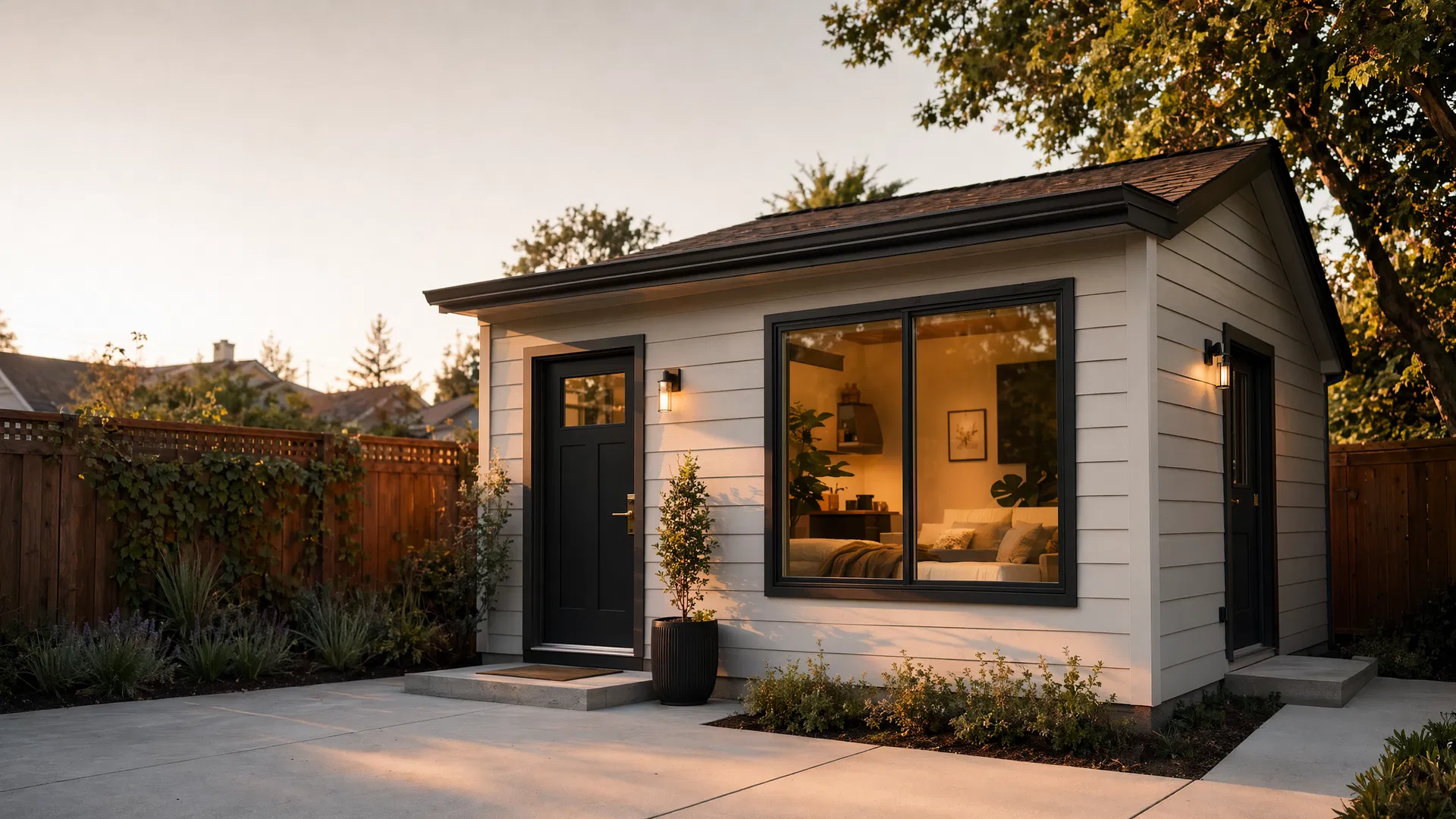
Garage Conversion House Hacking: How to Turn Your Garage Into a Rental
The fix for your mortgage might be sitting in your driveway. Here is how garage conversion house hacking works, what it costs, the legal must-haves, and how a DSCR loan can help new investors get started.
Read articleGet the Free House Hacking Starter Kit
The step-by-step playbook for buying your first house hack — checklists, deal math, and a financing roadmap.